

ISSN 0439-755X
CN 11-1911/B
CN 11-1911/B
Acta Psychologica Sinica ›› 2026, Vol. 58 ›› Issue (9): 1781-1794.doi: 10.3724/SP.J.1041.2026.1781
• Column on the Stress, Resilience, and Health • Previous Articles Next Articles
LIU Yang( ), HU Fangfang, SUN Hao
Published:2026-09-25
Online:2026-07-29
Contact:
LIU Yang, E-mail: liuyang0330@snnu.edu.cn
LIU Yang, HU Fangfang, SUN Hao. (2026). The impact of virtual reality motor-cognitive dual-task training on individuals with poor spatial visualization ability: Evidence from behavioral and fNIRS studies. Acta Psychologica Sinica, 58(9), 1781-1794.
Add to citation manager EndNote|Ris|BibTeX
URL: https://journal.psych.ac.cn/acps/EN/10.3724/SP.J.1041.2026.1781
| Variable | VR Motor-Cognitive Dual-Task Group | VR Motor Group | VR Cognitive Group | Control Group | F(3, 116) | p |
|---|---|---|---|---|---|---|
| Sex (Male/Female) | 15/15 | 15/15 | 15/15 | 15/15 | — | — |
| Age/years | 19.97±0.81 | 20.10±0.76 | 19.87±0.77 | 19.97±0.61 | 0.50 | 0.69 |
| BMI (kg/m2) | 21.65±1.66 | 21.61±1.71 | 20.97±1.81 | 20.84±0.64 | 2.31 | 0.08 |
| Resting Heart Rate/BPM | 68.27±5.90 | 68.13±4.81 | 69.40±6.30 | 69.53±8.31 | 0.02 | 0.99 |
Table 1 Demographic and Baseline Characteristics of Participants
| Variable | VR Motor-Cognitive Dual-Task Group | VR Motor Group | VR Cognitive Group | Control Group | F(3, 116) | p |
|---|---|---|---|---|---|---|
| Sex (Male/Female) | 15/15 | 15/15 | 15/15 | 15/15 | — | — |
| Age/years | 19.97±0.81 | 20.10±0.76 | 19.87±0.77 | 19.97±0.61 | 0.50 | 0.69 |
| BMI (kg/m2) | 21.65±1.66 | 21.61±1.71 | 20.97±1.81 | 20.84±0.64 | 2.31 | 0.08 |
| Resting Heart Rate/BPM | 68.27±5.90 | 68.13±4.81 | 69.40±6.30 | 69.53±8.31 | 0.02 | 0.99 |
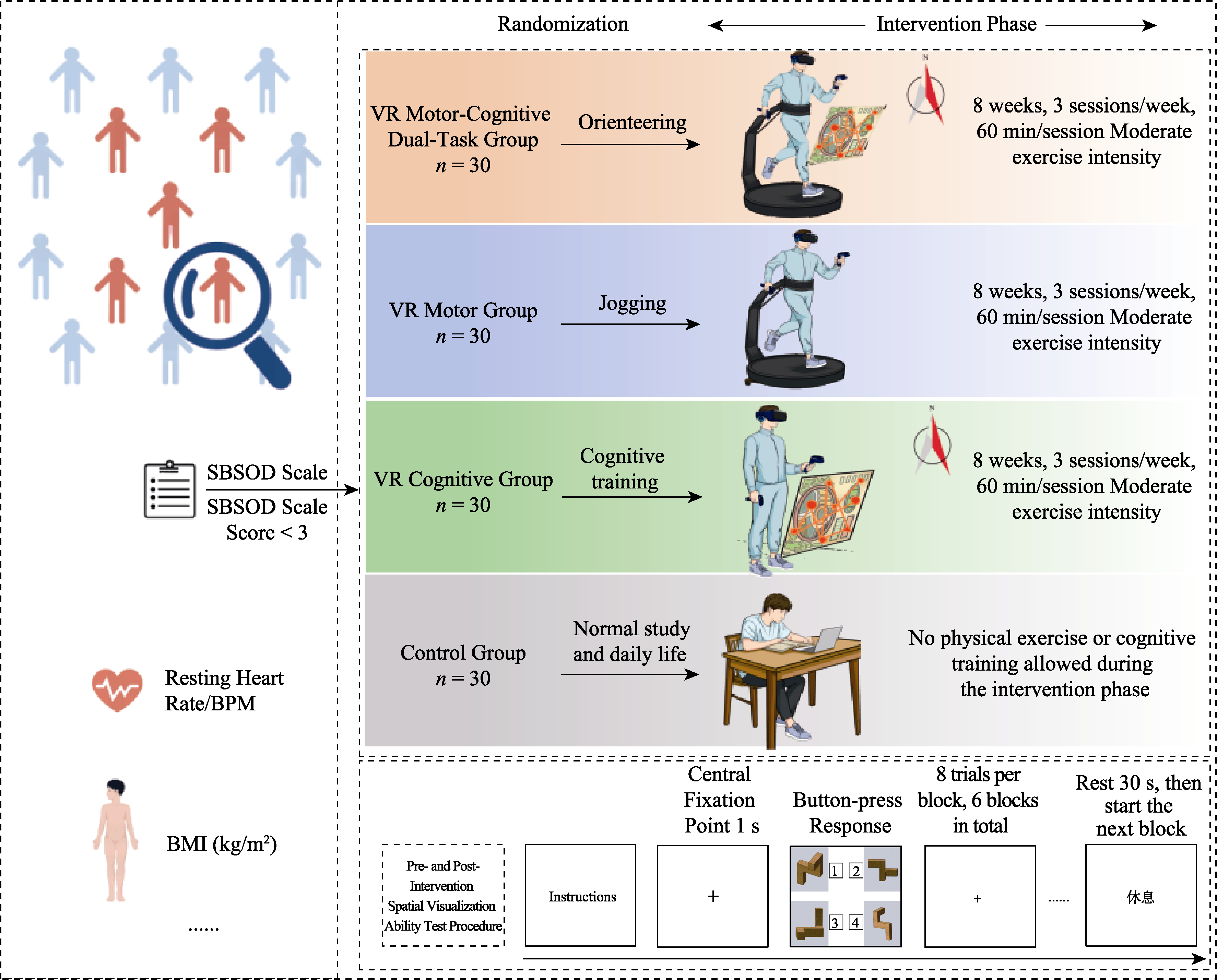
Figure 1. Experimental Flowchart.
| Brain Region | Corresponding Channel(s) |
|---|---|
| Left Frontopolar Area, L-FPA | ch2、ch3、ch6、ch7 |
| Right Frontopolar Area, R-FPA | ch1、ch2、ch4、ch5 |
| Left Orbitofrontal Cortex, L-OFC | ch9、ch10 |
| Right Orbitofrontal Cortex, R-OFC | ch8、ch9 |
| Left Somatosensory Association Cortex, L-SAC | ch16、ch19、ch20 |
| Right Somatosensory Association Cortex, R-SAC | ch15、ch18、ch19 |
| Left Primary Motor Cortex, L-M1 | ch12、ch13、ch17 |
| Right Primary Motor Cortex, R-M1 | ch11、ch12、ch14 |
Table 2 Correspondence Between Regions of Interest (ROIs) and fNIRS Measurement Channels
| Brain Region | Corresponding Channel(s) |
|---|---|
| Left Frontopolar Area, L-FPA | ch2、ch3、ch6、ch7 |
| Right Frontopolar Area, R-FPA | ch1、ch2、ch4、ch5 |
| Left Orbitofrontal Cortex, L-OFC | ch9、ch10 |
| Right Orbitofrontal Cortex, R-OFC | ch8、ch9 |
| Left Somatosensory Association Cortex, L-SAC | ch16、ch19、ch20 |
| Right Somatosensory Association Cortex, R-SAC | ch15、ch18、ch19 |
| Left Primary Motor Cortex, L-M1 | ch12、ch13、ch17 |
| Right Primary Motor Cortex, R-M1 | ch11、ch12、ch14 |
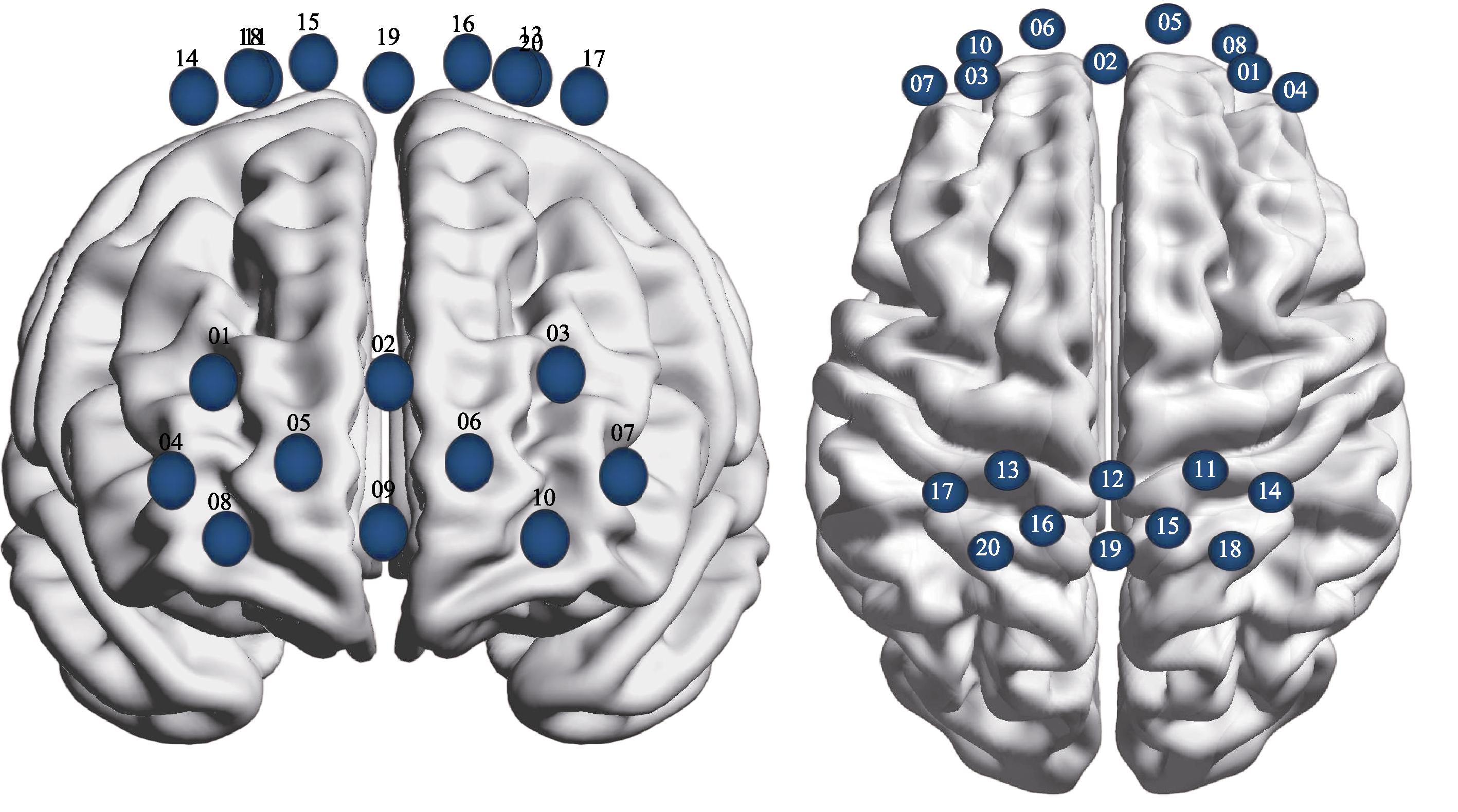
Figure 2. fNIRS Channel Layout and Assigned Brain Region Information. Note. The left panel shows the prefrontal cortex, and the right panel shows the parietal cortex.
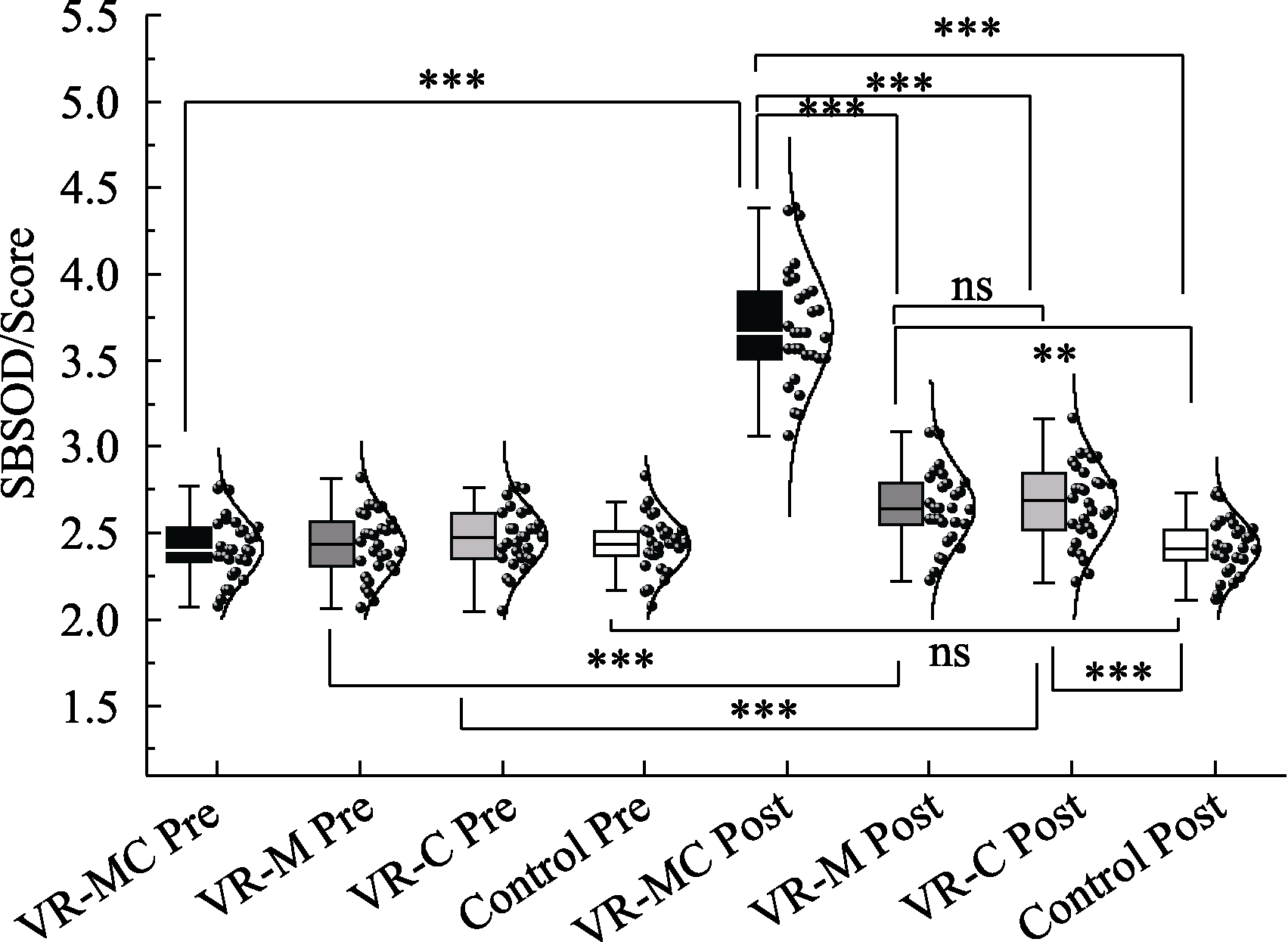
Figure 3. Differences in SBSOD scores before and after intervention. Note. ns indicates non-significant (p ≥ 0.05); * p < 0.05, ** p < 0.01, *** p < 0.001; same below.
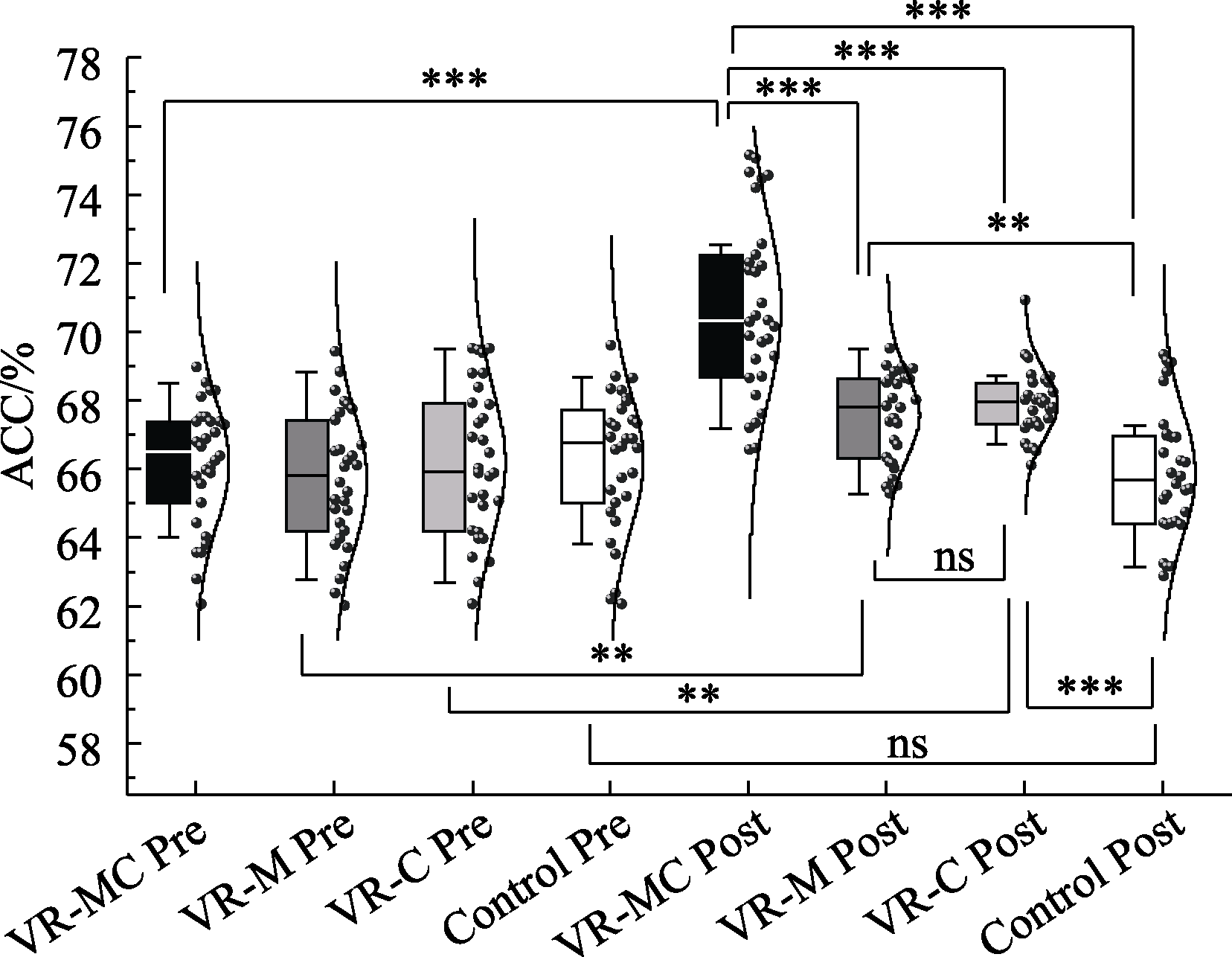
Figure 4. Differences in MRT-ACC before and after intervention.
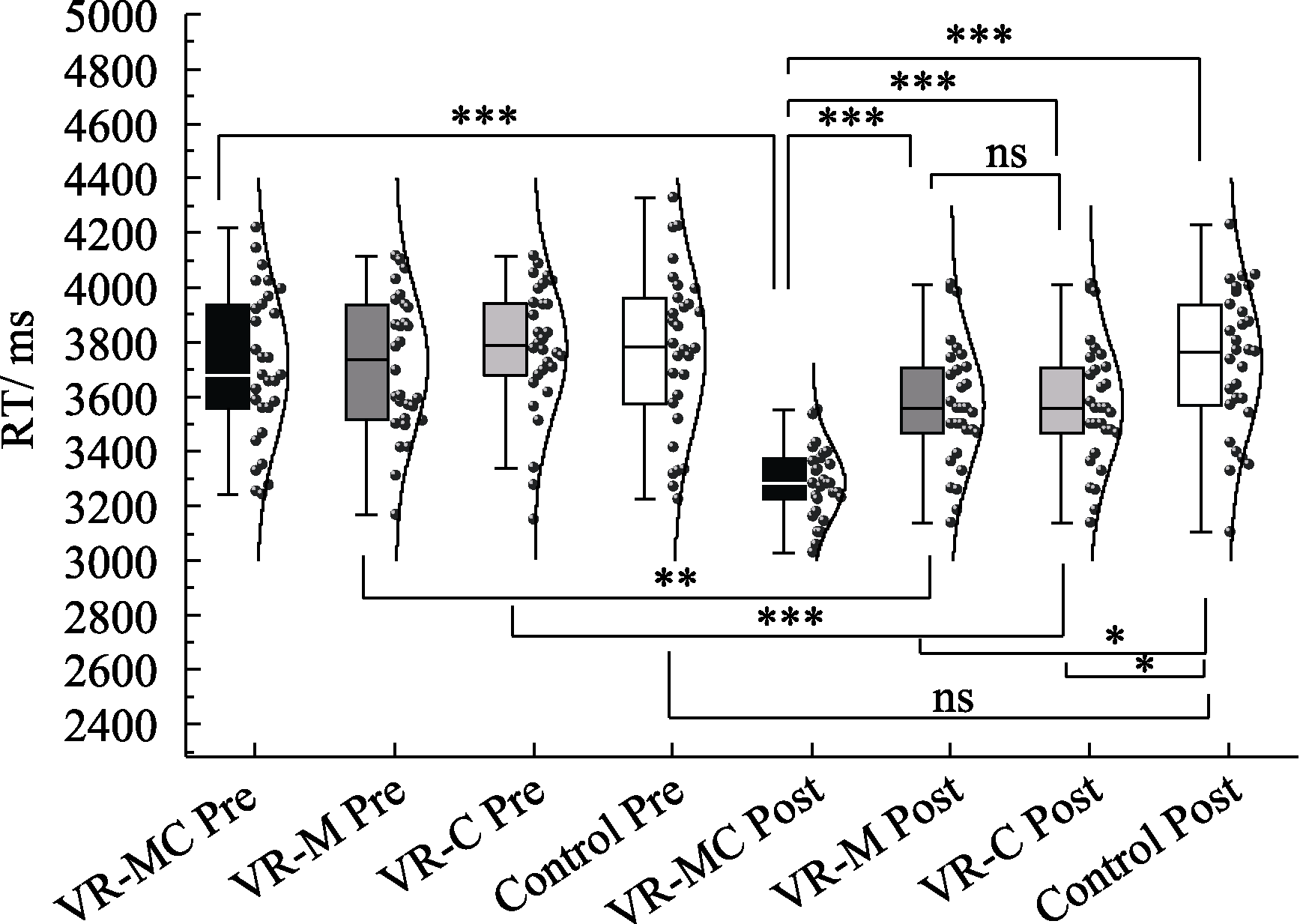
Figure 5. Differences in MRT-RT before and after intervention.
| Brain Region | VR Motor-Cognitive Dual-Task Group | VR Motor Group | VR Cognitive Group | Control Group | ||||
|---|---|---|---|---|---|---|---|---|
| Pre-intervention × 10?3 | Post-intervention × 10?3 | Pre-intervention × 10?3 | Post-intervention × 10?3 | Pre-intervention × 10?3 | Post-intervention × 10?3 | Pre-intervention × 10?3 | Post-intervention × 10?3 | |
| R-FPA | 4.49±5.41 | ?2.51±5.99 | 2.95±5.70 | ?2.68±6.04 | 2.98±11.46 | ?3.51±8.92 | 3.22±8.89 | 3.34±7.81 |
| L-FPA | 3.38±7.47 | ?10.03±7.38 | 4.35±8.89 | ?2.07±9.96 | 2.73±9.01 | ?2.00±10.03 | 3.76±8.92 | 1.64±11.41 |
| R-OFC | 2.90±7.55 | ?1.26±9.28 | 3.48±9.99 | 2.83±8.27 | 5.62±12.97 | 5.86±12.97 | 3.83±8.51 | 1.10±9.99 |
| L-OFC | 2.36±6.97 | ?0.25±8.92 | 2.10±11.00 | 2.12±9.22 | 6.31±13.08 | ?0.64±2.17 | 1.95±9.77 | 1.55±10.59 |
| R-M1 | 1.70±8.33 | ?10.91±10.79 | 1.16±9.07 | ?0.02±6.79 | 1.40±13.00 | ?1.67±5.84 | 3.69±9.58 | 3.23±8.76 |
| L-M1 | 1.80±7.58 | 0.41±7.93 | 3.30±8.06 | 2.05±8.18 | 0.02±9.84 | 2.44±14.73 | 2.47±10.36 | 0.74±12.99 |
| R-SAC | 1.00±8.69 | 0.44±6.70 | 1.44±8.84 | 0.66±8.32 | 0.83±8.03 | 3.76±9.86 | 2.56±7.81 | 2.63±8.78 |
| L-SAC | 2.45±6.24 | 0.02±7.42 | 3.79±10.01 | 1.53±7.75 | 2.30±11.01 | 2.44±6.72 | 1.91±9.49 | 2.86±10.34 |
Table 3 Descriptive Statistics of Beta Values Before and After Intervention by Exercise Modality (M ± SD)
| Brain Region | VR Motor-Cognitive Dual-Task Group | VR Motor Group | VR Cognitive Group | Control Group | ||||
|---|---|---|---|---|---|---|---|---|
| Pre-intervention × 10?3 | Post-intervention × 10?3 | Pre-intervention × 10?3 | Post-intervention × 10?3 | Pre-intervention × 10?3 | Post-intervention × 10?3 | Pre-intervention × 10?3 | Post-intervention × 10?3 | |
| R-FPA | 4.49±5.41 | ?2.51±5.99 | 2.95±5.70 | ?2.68±6.04 | 2.98±11.46 | ?3.51±8.92 | 3.22±8.89 | 3.34±7.81 |
| L-FPA | 3.38±7.47 | ?10.03±7.38 | 4.35±8.89 | ?2.07±9.96 | 2.73±9.01 | ?2.00±10.03 | 3.76±8.92 | 1.64±11.41 |
| R-OFC | 2.90±7.55 | ?1.26±9.28 | 3.48±9.99 | 2.83±8.27 | 5.62±12.97 | 5.86±12.97 | 3.83±8.51 | 1.10±9.99 |
| L-OFC | 2.36±6.97 | ?0.25±8.92 | 2.10±11.00 | 2.12±9.22 | 6.31±13.08 | ?0.64±2.17 | 1.95±9.77 | 1.55±10.59 |
| R-M1 | 1.70±8.33 | ?10.91±10.79 | 1.16±9.07 | ?0.02±6.79 | 1.40±13.00 | ?1.67±5.84 | 3.69±9.58 | 3.23±8.76 |
| L-M1 | 1.80±7.58 | 0.41±7.93 | 3.30±8.06 | 2.05±8.18 | 0.02±9.84 | 2.44±14.73 | 2.47±10.36 | 0.74±12.99 |
| R-SAC | 1.00±8.69 | 0.44±6.70 | 1.44±8.84 | 0.66±8.32 | 0.83±8.03 | 3.76±9.86 | 2.56±7.81 | 2.63±8.78 |
| L-SAC | 2.45±6.24 | 0.02±7.42 | 3.79±10.01 | 1.53±7.75 | 2.30±11.01 | 2.44±6.72 | 1.91±9.49 | 2.86±10.34 |
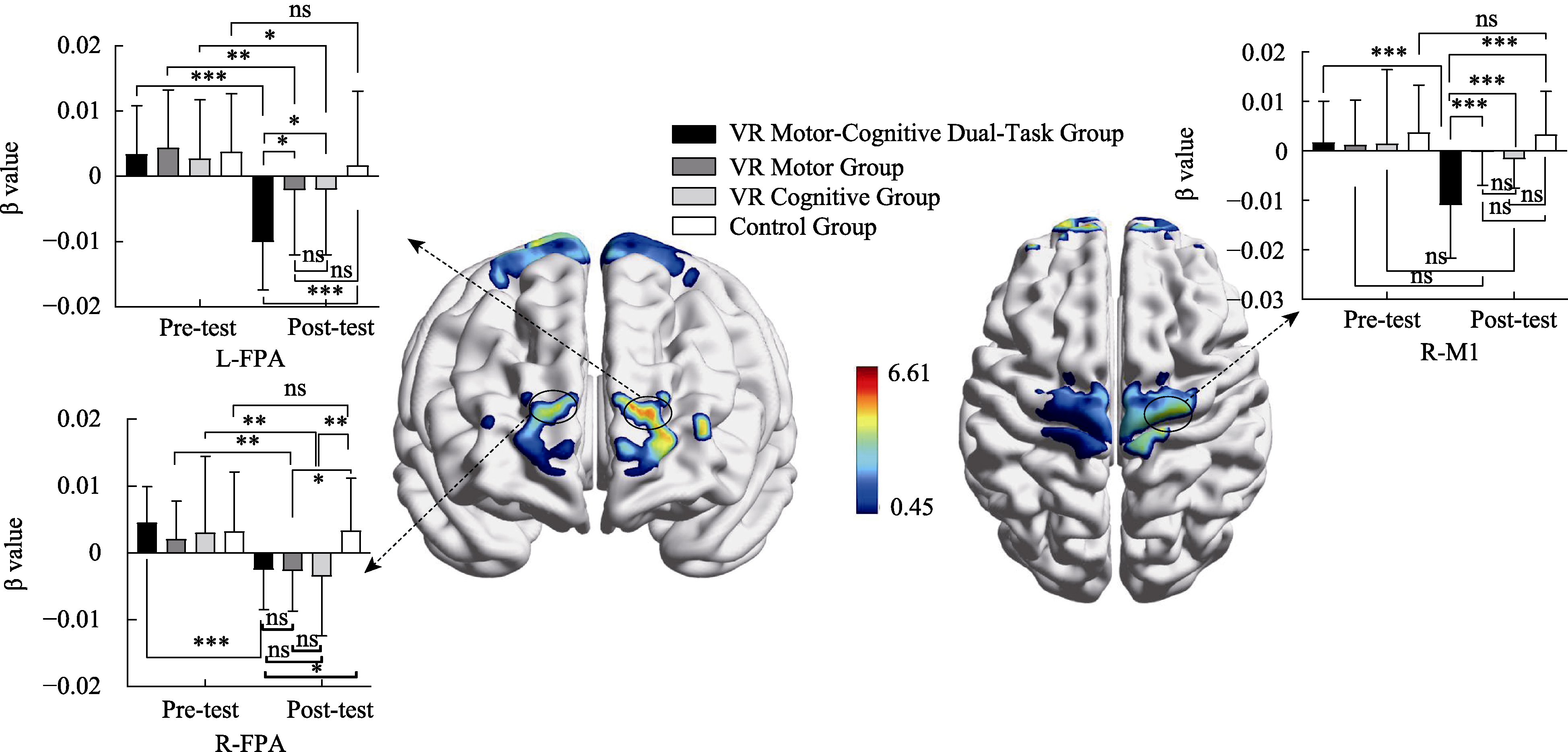
Figure 6. Brain activation maps showing the group × time interaction effect.
| Group | Accuracy | AUC | Precision | Recall | F1-Score | Key Features | Importance Weight |
|---|---|---|---|---|---|---|---|
| Control vs. VR Motor Group | 0.65 | 0.66 | 0.66 | 0.63 | 0.64 | Delta_L-FPA/Pre_R-FPA | 0.14/0.08 |
| Control vs. VR Cognitive Group | 0.82 | 0.83 | 0.83 | 0.80 | 0.81 | Delta_R-FPA/Delta_L-FPA | 0.15/0.13 |
| Control vs. VR Motor-Cognitive Dual-Task Group | 0.80 | 0.79 | 0.78 | 0.83 | 0.81 | Delta_L-FPA/Delta_R-M1 | 0.23/0.15 |
Table 4. Comparison of Model Performance and Key Features for Neural Pattern Classification Between Different Intervention Groups and the Control Group
| Group | Accuracy | AUC | Precision | Recall | F1-Score | Key Features | Importance Weight |
|---|---|---|---|---|---|---|---|
| Control vs. VR Motor Group | 0.65 | 0.66 | 0.66 | 0.63 | 0.64 | Delta_L-FPA/Pre_R-FPA | 0.14/0.08 |
| Control vs. VR Cognitive Group | 0.82 | 0.83 | 0.83 | 0.80 | 0.81 | Delta_R-FPA/Delta_L-FPA | 0.15/0.13 |
| Control vs. VR Motor-Cognitive Dual-Task Group | 0.80 | 0.79 | 0.78 | 0.83 | 0.81 | Delta_L-FPA/Delta_R-M1 | 0.23/0.15 |
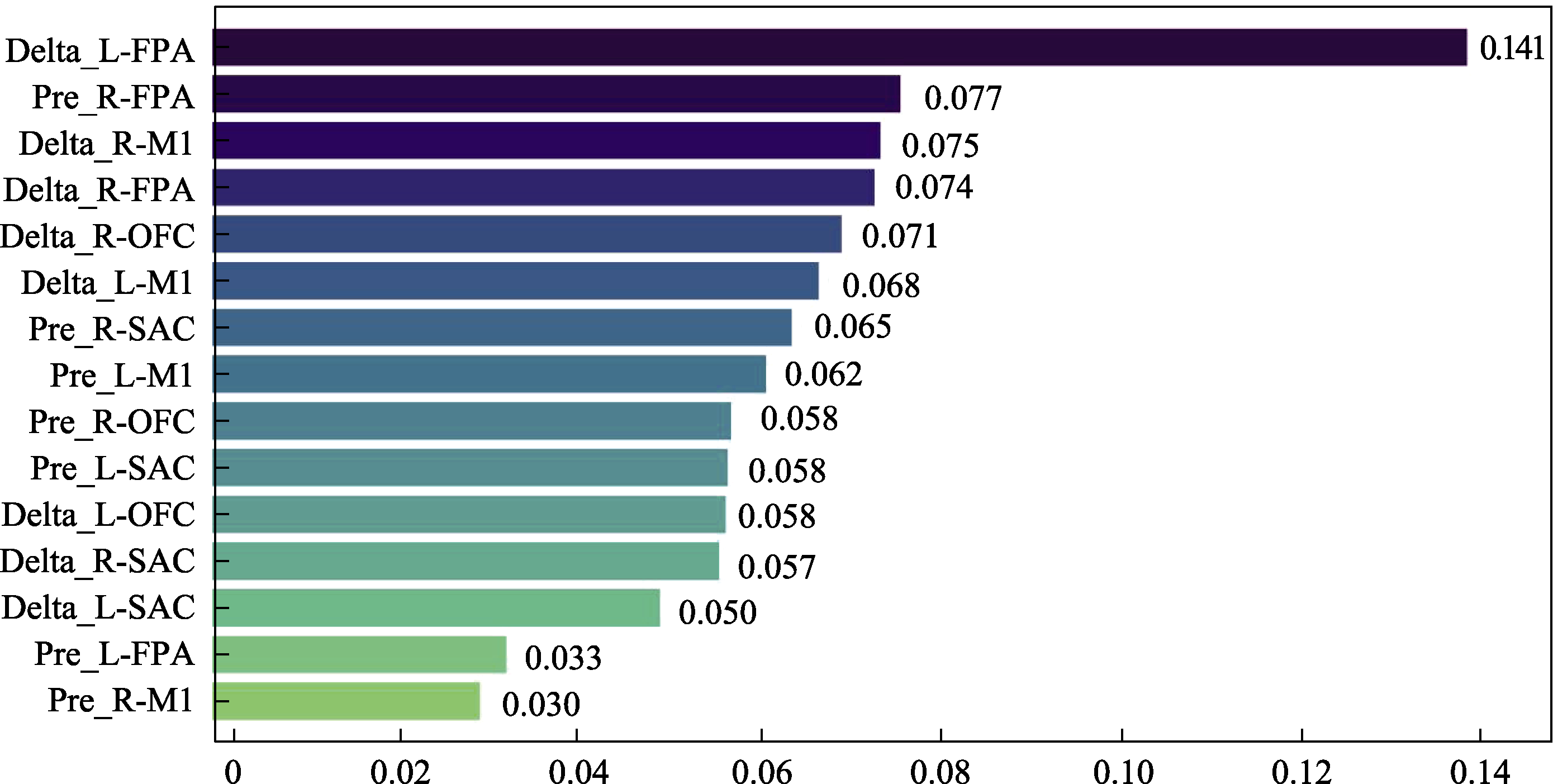
Figure 7. Feature Importance Ranking of Brain Regions in the Classification Model Between the Control Group and the VR Motor Group.
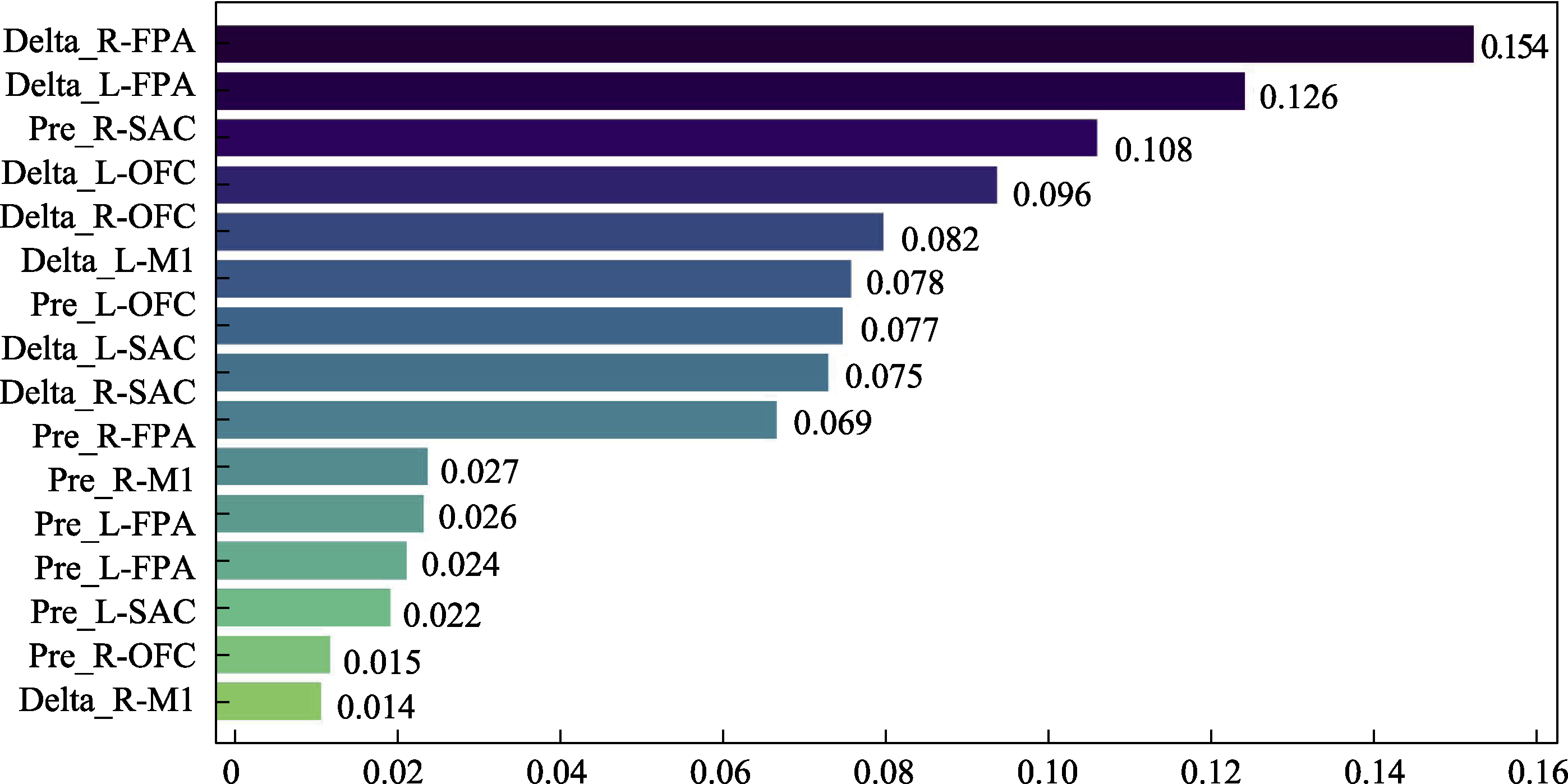
Figure 8. Feature Importance Ranking of Brain Regions in the Classification Model Between the Control Group and the VR Cognitive Group.
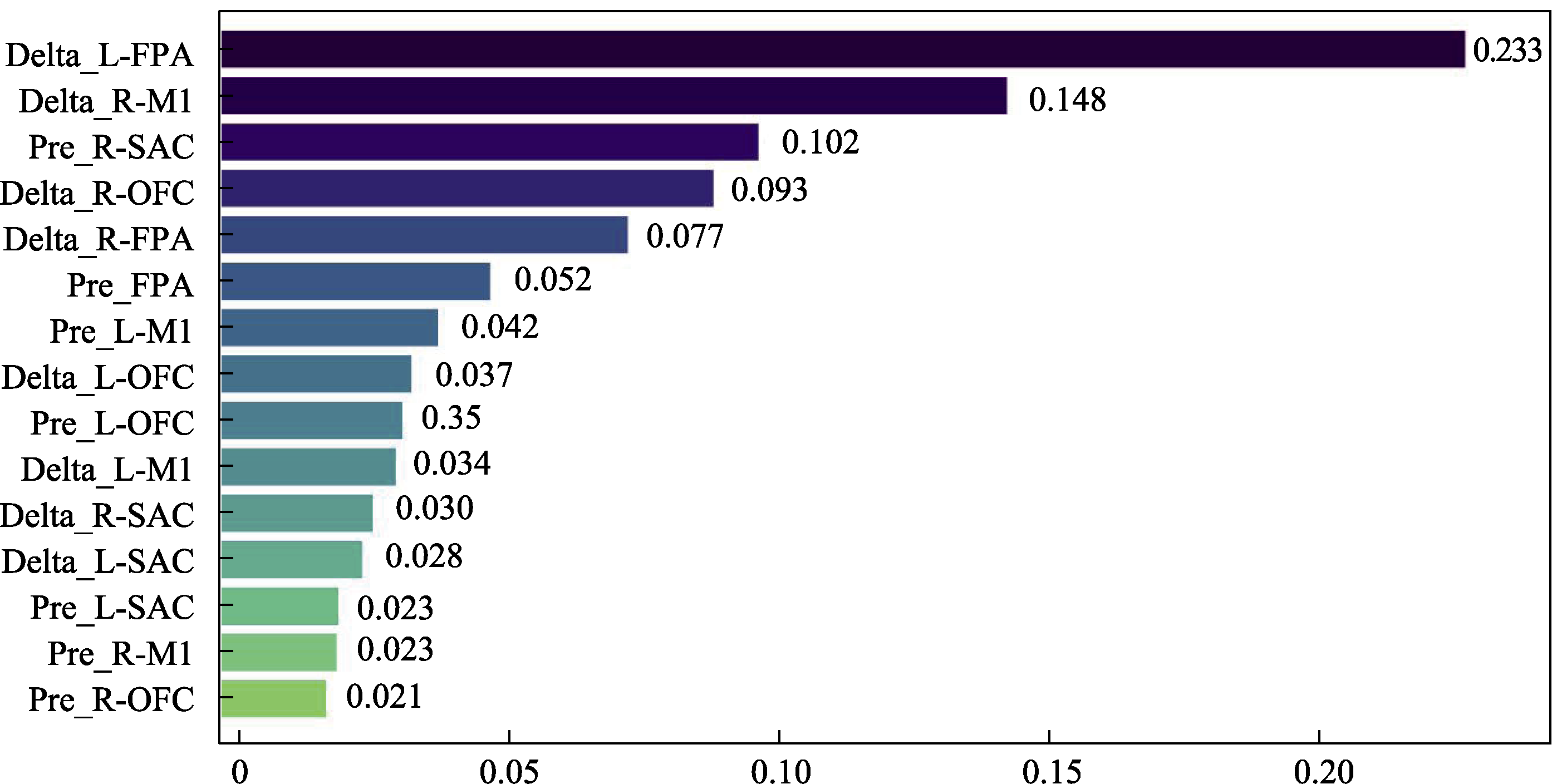
Figure 9. Feature Importance Ranking of Brain Regions in the Classification Model Between the Control Group and the VR Motor-Cognitive Dual-Task Group.
| [1] | Bao S., Liu J., & Liu Y. (2022). Shedding light on the effects of orienteering exercise on spatial memory performance in college students of different genders: An fNIRS study. Brain Sciences, 12(7), 852. |
| [2] | Beanato E., Moon H. J., Windel F., Vassiliadis P., Wessel M. J., Popa T., ... Hummel F. C. (2024). Noninvasive modulation of the hippocampal-entorhinal complex during spatial navigation in humans. Science Advances, 10(44), 4103. |
| [3] |
Benjamini Y., & Hochberg Y. (1995). Controlling the false discovery rate: A practical and powerful approach to multiple testing. Journal of the Royal Statistical Society: Series B (Methodological), 57(1), 289-300.
doi: 10.1111/j.2517-6161.1995.tb02031.x URL |
| [4] |
Bhattacharjee S., Kashyap R., Abualait T., & Chen S. H. A. (2020). The role of primary motor cortex: More than movement execution. Journal of Motor Behavior, 53(2), 258-274.
doi: 10.1080/00222895.2020.1738992 URL |
| [5] |
Corballis M. C. (1997). Mental rotation and the right hemisphere. Brain and Language, 57(1), 100-121.
pmid: 9126409 |
| [6] |
Dahmani L., & Bohbot V. D. (2020). Habitual use of GPS negatively impacts spatial memory during self-guided navigation. Scientific Reports, 10, 6310.
doi: 10.1038/s41598-020-62877-0 pmid: 32286340 |
| [7] | Erickson K. I., Voss M. W., Prakash R. S., Basak C., Szabo A., Chaddock L., … Kramer A. F. (2011). Exercise training increases size of hippocampus and improves memory. Proceedings of the National Academy of Sciences of the United States of America, 108(7), 3017-3022. |
| [8] |
Fabre C., Chamari K., Mucci P., Massé-Biron J., & Préfaut C. (2002). Improvement of cognitive function by mental and/or individualized aerobic training in healthy elderly subjects. International Journal of Sports Medicine, 23(6), 415-421.
doi: 10.1055/s-2002-33735 pmid: 12215960 |
| [9] |
Feizpour A., Buckley M. J., Mundinano I. C., Rosa M., & Mansouri F. A. (2024). The role of frontopolar cortex in adjusting the balance between response execution and action inhibition in anthropoids. Progress in Neurobiology, 241, 102671.
doi: 10.1016/j.pneurobio.2024.102671 URL |
| [10] | Feng T., Li Y. W., & Zhang Z. Q. (2021). Temporal embodiment and time course of event-related brain potentials in diving athlete's mental rotation. Journal of Beijing Sport University, 44(2), 105-115. |
| [11] | Fishburn F. A., Norr M. E., Medvedev A. V., & Vaidya C. J. (2014). Sensitivity of fNIRS to cognitive state and load. Frontiers in Human Neuroscience, 8, Article 76. |
| [12] | Gu Q., Mao J., Huang T., & Sun J. H. (2023). Effects of immersive virtual reality exergaming on executive function among young adults: The role of exercise intensity in exergaming. China Sport Science and Technology, 59(12), 35-43. |
| [13] | Guo C., Ding D., Zheng L., & Tang C. (2023). Study on the mental rotation ability of orienteering expert-novice from the perspective of embodied cognition. Journal of Beijing Sport University, 46(9), 106-117. |
| [14] | Guo L. M., Yang W. L., & Liu Y. (2023). Study on visual search features of picture recognition of orienteers in realistic scenes. China Sport Science and Technology, 59(11), 24-31. |
| [15] |
Haier R. J., Siegel B. V., Nuechterlein K. H., Hazlett E., Wu J. C., Paek J., Browning H. L., & Buchsbaum M. S. (1988). Cortical glucose metabolic rate correlates of abstract reasoning and attention studied with positron emission tomography. Intelligence, 12(2), 199-217.
doi: 10.1016/0160-2896(88)90016-5 URL |
| [16] | Hu F. F., Zhang W., Zhao M. S., & Liu Y. (2025). Influence of exercise intensity and task difficulty on image recognition decisions of orienteers: Evidence from fNIRS. Journal of Capital University of Physical Education and Sports, 37(1), 105-115. |
| [17] | Ishikawa T., & Zhou Y. (2020). Improving cognitive mapping by training for people with a poor sense of direction. Cognitive Research: Principles and Implications, 5(1), 39. |
| [18] |
Islam F., Bright Z., Chen M. H., Zhan L., & Shi C. (2026). Evaluating the effect of immersive virtual reality technologies on cognitive load, situation awareness, and engagement using eye movements. Applied Ergonomics, 134, 104720.
doi: 10.1016/j.apergo.2025.104720 URL |
| [19] |
Jarrin F., Koga Y., Thomas D., & Kawasaki H. (2024). Virtual reality-based site layout planning for building design. Automation in Construction, 167, 105690.
doi: 10.1016/j.autcon.2024.105690 URL |
| [20] | Ju C. T., & You X. Q. (2013). Spatial ability tests and their applications. Journal of Psychological Science, 36(2), 463-468. |
| [21] | Kim D. H., Lee K. D., Bulea T. C., & Park H. S. (2022). Increasing motor cortex activation during grasping via novel robotic mirror hand therapy: A pilot fNIRS study. Journal of NeuroEngineering and Rehabilitation, 19(1), 8. |
| [22] | Li S. X., & Zhou Y. P. (2006). The Influence of Individual Cognitive Style and Material Complexity on Visuo-Spatial Working Memory. Acta Psychologica Sinica, 38(4), 523-531. |
| [23] | Liu Y., & He J. P. (2016). Psychological interpretation and reflection on specialized cognitive skills in orienteering. Liaoning Sport Science and Technology, 38(5), 64-69. |
| [24] | Liu Y., He J. P., & Liu T. Y. (2018). An experimental study of specialized cognitive ability training for orienteering practicers. Journal of Physical Education, 25(2), 57-62. |
| [25] | Liu Y., Liu Z. H., & Chen L. X. (2025). Impact of VR immersive acute aerobic exercise on depression in female college students and characteristics of neural activities. Journal of Beijing Sport University, 48(4), 139-156. |
| [26] | Liu Y., & Tang S. J. (2022). Research on the influence of map-reading methods and maps difficulty on orienteers' map-reading decision performance and visual search characteristics. Journal of Psychological Science, 45(6), 1314-1321. |
| [27] | Liu S. F., Zhang X. Y., Lu Y., Liu Y., Qin K. Y., & Gao Y. (2024). The enhancing effect of cognitive training on spatial navigation: Spatial anxiety as a mediator. Journal of Psychological Science, 47(6), 1305-1316. |
| [28] | Lu N. (2023). The influence of landmark presentation methods in shopping mall maps on wayfinding behavior of individuals with high and low spatial abilities [Unpublished master’s thesis]. Tianjin Normal University. |
| [29] |
Matthäus F., Schmidt J. -P., Banerjee A., Schulze T. G., Demirakca T., & Diener C. (2012). Effects of age on the structure of functional connectivity networks during episodic and working memory demand. Brain Connectivity, 2(3), 113-124.
doi: 10.1089/brain.2012.0077 pmid: 22698449 |
| [30] |
Mcgee M. G. (1979). Human spatial abilities: Psychometric studies and environmental, genetic, hormonal, and neurological influences. Psychological Bulletin, 86(5), 889-918.
pmid: 386403 |
| [31] |
Meilinger T., Frankenstein J., Simon N., Bülthoff H. H., & Bresciani J. -P. (2016). Not all memories are the same: Situational context influences spatial recall within one's city of residency. Psychonomic Bulletin & Review, 23(1), 246-252.
doi: 10.3758/s13423-015-0883-7 URL |
| [32] |
Miller E. K., & Cohen J. D. (2001). An integrative theory of prefrontal cortex function. Annual Review of Neuroscience, 24(1), 167-202.
doi: 10.1146/neuro.2001.24.issue-1 URL |
| [33] | Moriguchi Y., & Hiraki K. (2013). Prefrontal cortex and executive function in young children: A review of NIRS studies. Frontiers in Human Neuroscience, 7, 1-9. |
| [34] |
Morioka S., Yamada M., & Komori T. (2008). Frontal lobe activity during the performance of spatial tasks: fNIRS study. Journal of Physical Therapy Science, 20(2), 135-139.
doi: 10.1589/jpts.20.135 URL |
| [35] | Pan J. J., Jiao X. J., Jiang J., Xu F. G., & Yang H. J. (2014). Mental workload assessment based on functional near-infrared spectroscopy. Acta Optica Sinica, 34(11), 344-349. |
| [36] | Perpetuini D., Cardone D., Filippini C., Chiarelli A. M., & Merla A. (2021). A motion artifact correction procedure for fNIRS signals based on wavelet transform and infrared thermography video tracking. Sensors, 21(15), 5117. |
| [37] |
Pietsch S., & Jansen P. (2018). Laterality-specific training improves mental rotation performance in young soccer players. Frontiers in Psychology, 9, 220.
doi: 10.3389/fpsyg.2018.00220 pmid: 29535665 |
| [38] | Qiu T., Hameed N. U. F., Peng Y., Wang S., Wu J., & Zhou L. (2019). Functional near-infrared spectroscopy for intraoperative brain mapping. Neurophotonics, 6(4), 045010. |
| [39] | Quan W. X., Bai Y. F., Dong W. T., Tian J., & Yang S. Z. (2012). Normal frontotemporal oxygenated hemoglobin level detection by near-infrared imaging. Journal of China Medical University, 41(11), 1044-1046. |
| [40] |
Serino S., Pedroli E., Tuena C., De Leo G., Stramba-Badiale M., Goulene K., Mariotti N. G., & Riva G. (2017). A novel virtual reality-based training protocol for the enhancement of the “Mental Frame Syncing” in individuals with Alzheimer's disease: A development-of-concept trial. Frontiers in Aging Neuroscience, 9, 240.
doi: 10.3389/fnagi.2017.00240 URL |
| [41] | Shan X. Z. (2011). On application and establishment of orienteering techniques groups. Journal of Xi’an Physical Education University, 28(3), 381-384. |
| [42] |
Solares L., García Navarra S., Llana T., Garces Arilla S., & Mendez M. (2025). Immersive technologies targeting spatial memory decline: A systematic review. Biomedicines, 13(9), 2105.
doi: 10.3390/biomedicines13092105 URL |
| [43] |
Sun H., Liu Z., Hu F., & Liu Y. (2026). A study on the effectiveness of immersive VR boxing games in improving depression levels among female college students with elevated depressive symptoms. Psychology of Sport and Exercise, 85, 103128.
doi: 10.1016/j.psychsport.2026.103128 URL |
| [44] | Tiwari S., Shah B., & Muthiah A. (2024). A global overview of SVA: Spatial-visual ability. Applied System Innovation, 7(3), 48. |
| [45] |
Vandenberg S. G., & Kuse A. R. (1978). Mental rotations, a group test of three-dimensional spatial visualization. Perceptual and Motor Skills, 47(2), 599-604.
doi: 10.2466/pms.1978.47.2.599 pmid: 724398 |
| [46] | Waddington E. E., & Heisz J. J. (2023). Orienteering experts report more proficient spatial processing and memory across adulthood. PloS One, 18(1), e0280435. |
| [47] | Weeks A. V. (2015). The effect of medium term physical activity interventions on cognitive function and indices of cardiovascular health in overweight and obese adults |
| [ Unpublished Doctoral dissertation]. University of Leeds. Retrieved June 3, 2025, from ] | |
| [48] | Wen R., Ma J., Zhu Y., & Hu J. (2016). Research on spatial cognition and design expression of orienteering map. Geomatics and Spatial Information Technology, 39(5), 23-26. |
| [49] | Yi Y., Liu J. R., Zhang Y., Tang S. J., & Liu Y. (2022). Behavioral performance and brain processing characteristics of orienteering athletes' mental rotation ability under different cognitive load conditions. Journal of Physical Education, 29(2), 136-144. |
| [50] |
Yin C. Y., Shi L., Zhang W., & Liu Y. (2024). The effect of orienteering exercises on the spatial orienteering ability for college students: Evidence from the behavioral science and fNIRS. Journal of Physical Education, 31(5), 135-142.
doi: 10.37359/JOPE.V31(3)2019 URL |
| [51] | Zhao Y. T. (2021). The relation of wayfinding strategy and spatial navigation, and influencing factors of wayfinding strategy [Unpublished doctorial dissertation]. Northeast Normal University, Changchun. |
| [52] | Zheng J. L., Wu Y. M., Shu S. Y., Liu S. H., Guo Z. Y., Bao X. M., Zhang Z. Q., & Ma H. Z. (2008). Role of the parietal lobes in cognition of the spatial memory in healthy volunteers. Tianjin Pharmaceutical, (2), 81-83. |
| [1] | LIU Shujuan, TAN Lirou, QI Yun, HU Shuai, WANG Xiaojuan, YANG Jianfeng. fNIRS-guided TMS technique reveals a critical role of the left inferior parietal lobule in Chinese tone perception [J]. Acta Psychologica Sinica, 2026, 58(7): 1343-1356. |
| [2] | Liu Cong, Liu Qiuxia, Zhu Mengrui, Jiao Lu, Wang Ruiming. Effects of Virtual Reality Learning Contexts on Foreign Language Words Production: Behavioral and EEG Evidence [J]. Acta Psychologica Sinica, 2026, 58(6): 1132-1142. |
| [3] | ZHANG Wenjie, LONG Ruyi, LI Miaoqing, FAN Wei, FU Xiaolan. The Impact of Emotional Valence and Response Orientation on Helping Behavior in Young Children: Evidence from Behavior and fNIRS [J]. Acta Psychologica Sinica, 2026, 58(6): 1143-1159. |
| [4] | REN Mengmeng, LI Jin, ZHONG Yiping, YANG Lijun. Effects of social norm types on pro-environmental behavior: The moderating role of moral identity and fNIRS evidence [J]. Acta Psychologica Sinica, 2026, 58(6): 1197-1212. |
| [5] | LI Yangzhuo, ZHANG Ruqian, SONG Sensen, LI Xianchun, LUO Junlong. Interactive Feedback in persuader-persuadee interaction Enhances Persuasion: An fNIRS hyperscanning study [J]. Acta Psychologica Sinica, 2025, 57(5): 805-819. |
| [6] | ZHANG Huan, QIN Xiquan, LIU Yu, LIN Lin, WU Jie. The influence of positive emotion with varying intensities of approach motivation on false memory and its neural mechanisms: A study based on semantic-related false memory [J]. Acta Psychologica Sinica, 2025, 57(3): 349-362. |
| [7] | XU Jing, LUO Fang, MA Yanzhen, HU Luming, TIAN Xuetao. Automated scoring of open-ended situational judgment tests [J]. Acta Psychologica Sinica, 2024, 56(6): 831-844. |
| [8] | ZHU Yi, HU Yi. Chunking feedback in instructor-learner interaction facilities long-term learning transfer: Behavioral and fNIRS hyperscanning studies [J]. Acta Psychologica Sinica, 2024, 56(5): 555-576. |
| [9] | ZHAO Li, ZHENG Yi, ZHAO Junbang, ZHANG Rui, FANG fang, FU Genyue, LEE Kang. The application of artificial intelligence methods in examining elementary school students’ academic cheating on homework and its key predictors [J]. Acta Psychologica Sinica, 2024, 56(2): 239-254. |
| [10] | CHEN Fakun, CHEN Tian, CAI Wenqi, WANG Xiaojuan, YANG Jianfeng. fNIRS evidence for left middle frontal gyrus involved in visual-spatial analysis of Chinese characters [J]. Acta Psychologica Sinica, 2023, 55(5): 685-695. |
| [11] | LI Wei, BIAN Ziming, CHEN Ximei, WANG Junjie, LUO Yijun, LIU Yong, SONG Shiqing, GAO Xiao, CHEN Hong. The relationship between frontotemporal regions and early life stress in children aged 9 to 12: Evidence from multimodal fMRI [J]. Acta Psychologica Sinica, 2023, 55(4): 572-587. |
| [12] | XU Chuyan, ZHU Lin, WANG Yunping, WANG Ruibing, LIU Conghui. The effect of foreign language speaking anxiety on the quality of verbal interaction: A fNIRS-based hyperscanning study [J]. Acta Psychologica Sinica, 2023, 55(12): 1949-1965. |
| [13] | HU Xiaofei, WANG Jiawei, LIU Hanyu, SONG Xiaolei. Effect of auditory stimulus on distance compression in virtual reality [J]. Acta Psychologica Sinica, 2023, 55(1): 1-8. |
| [14] | SUN Fang, SONG Wei, WEN Xiaotong, LI Huanhuan, OUYANG Lisheng, WEI Shijie. Efficacy of suicide ideation classification based on pain avoidance and the EEG characteristics under self-referential punishment [J]. Acta Psychologica Sinica, 2022, 54(9): 1031-1047. |
| [15] | CHENG Xiaojun, LIU Meihuan, PAN Yafeng. Shared responsibility promotes the benefit of interactive decision-making in novices: A hyperscanning study [J]. Acta Psychologica Sinica, 2022, 54(11): 1391-1402. |
| Viewed | ||||||
|
Full text |
|
|||||
|
Abstract |
|
|||||
